A fast, easy-to-read guide to what it is, what it isn’t, and what to ask before you commit.
Today you’ll learn:
- What All-on-4 actually is (in plain English)
- Who it’s usually best for — and who might need a different plan
- “Same-day teeth”: what that normally means in real life
- Risks + maintenance people don’t mention on TikTok
- The questions that separate a great plan from a cheap plan
Important: This is general information, not personal medical advice. Your dentist can only confirm options after an exam + scans.
If you’ve been told you “need All-on-4”... you might be thinking:
“Is this a big surgery?”
“Will it hurt?”
“Will I really leave with teeth?”
“What if it fails?”
Here’s the truth: All-on-4 is a proven concept when the planning, execution, and maintenance are right.
All-on-4 in 10 seconds
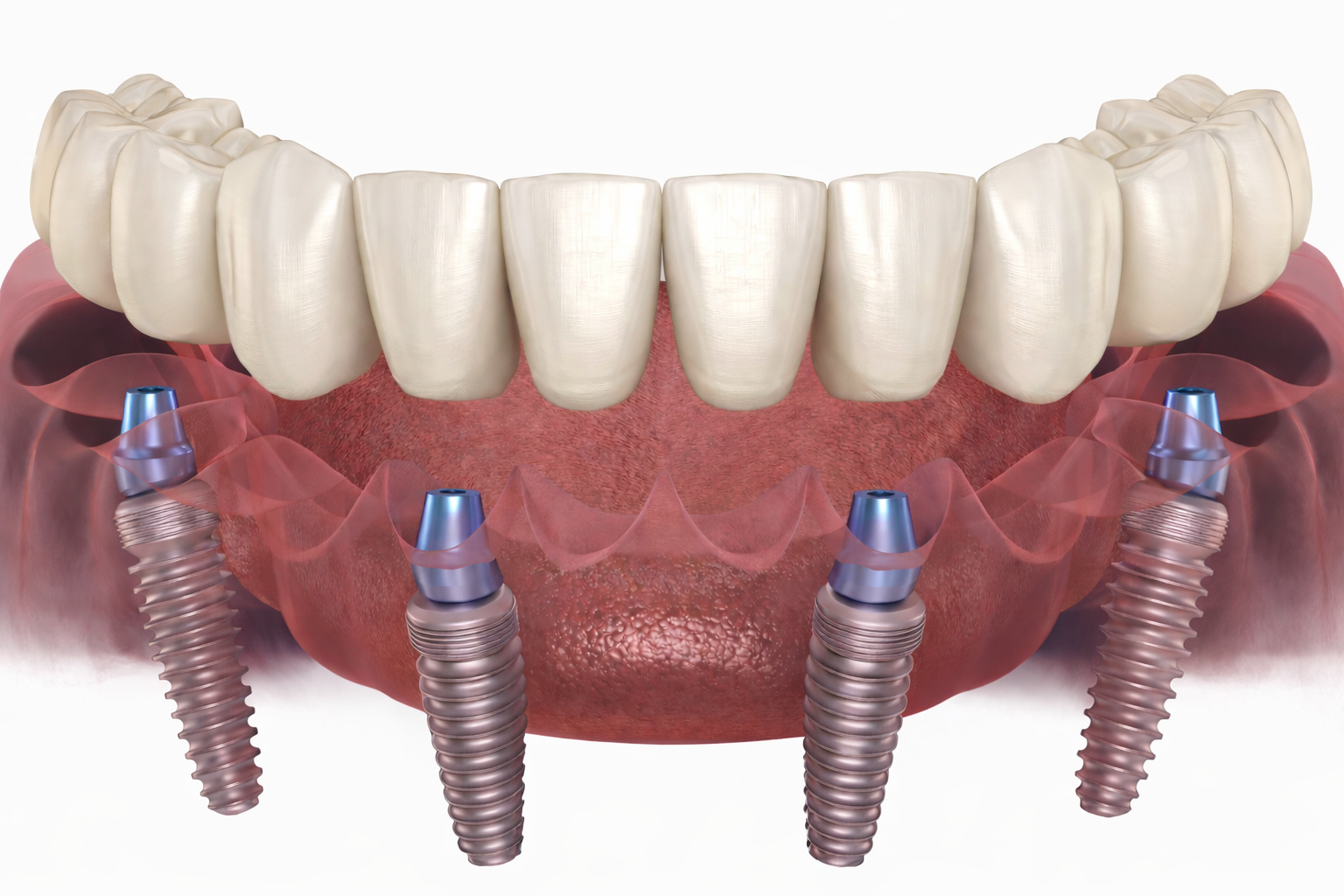
It’s a way to support a full arch of fixed teeth using four implants — often with two angled implants at the back to maximise available bone. The teeth are attached to the implants, so they don’t slip like a denture.

What “4 implants” actually looks like
The front implants are usually placed more vertically. The back implants are often angled to avoid the sinus/nerve and maximise the bone you already have.
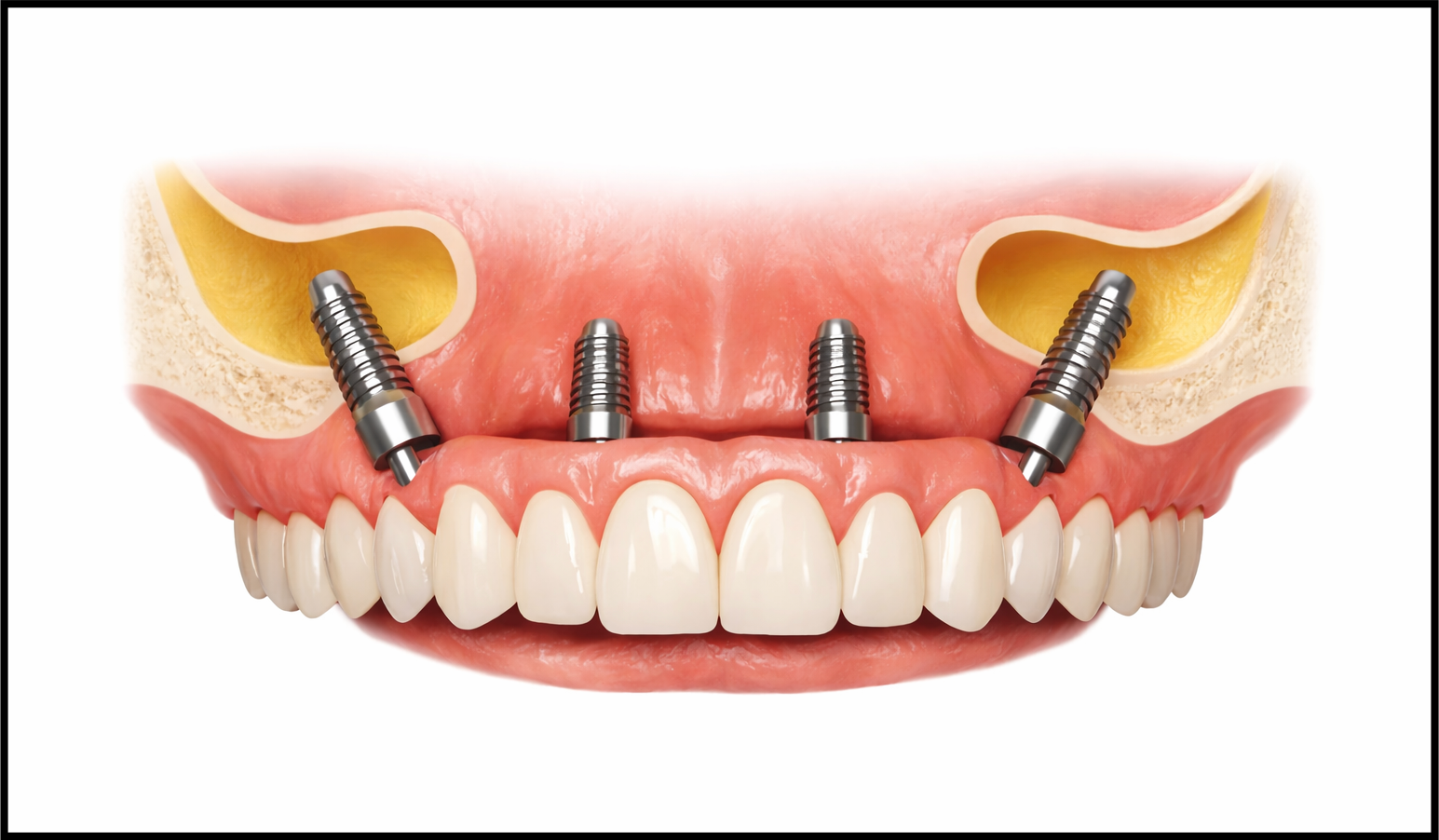
Key idea: It’s less about “only 4” and more about using 4 implants strategically to support a rigid bridge.
“Same-day teeth” — what that really means
Most clinics mean you may leave with a fixed temporary bridge on the day of surgery. It’s designed for healing — not maximum bite force. The final teeth usually come later after the implants integrate.
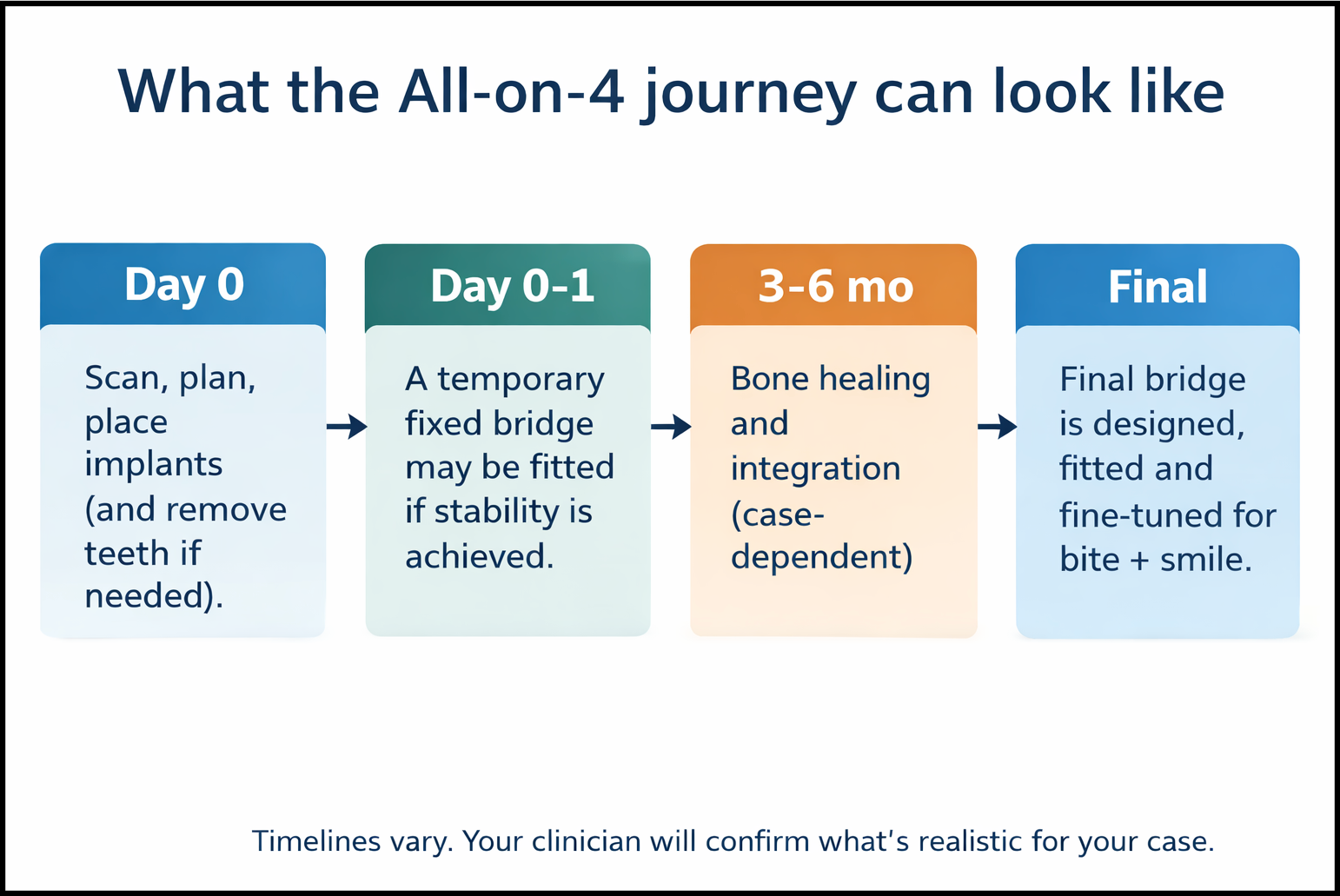
Good to know: “same-day” doesn’t mean “finished forever.” It means you’re not left without teeth while you heal.
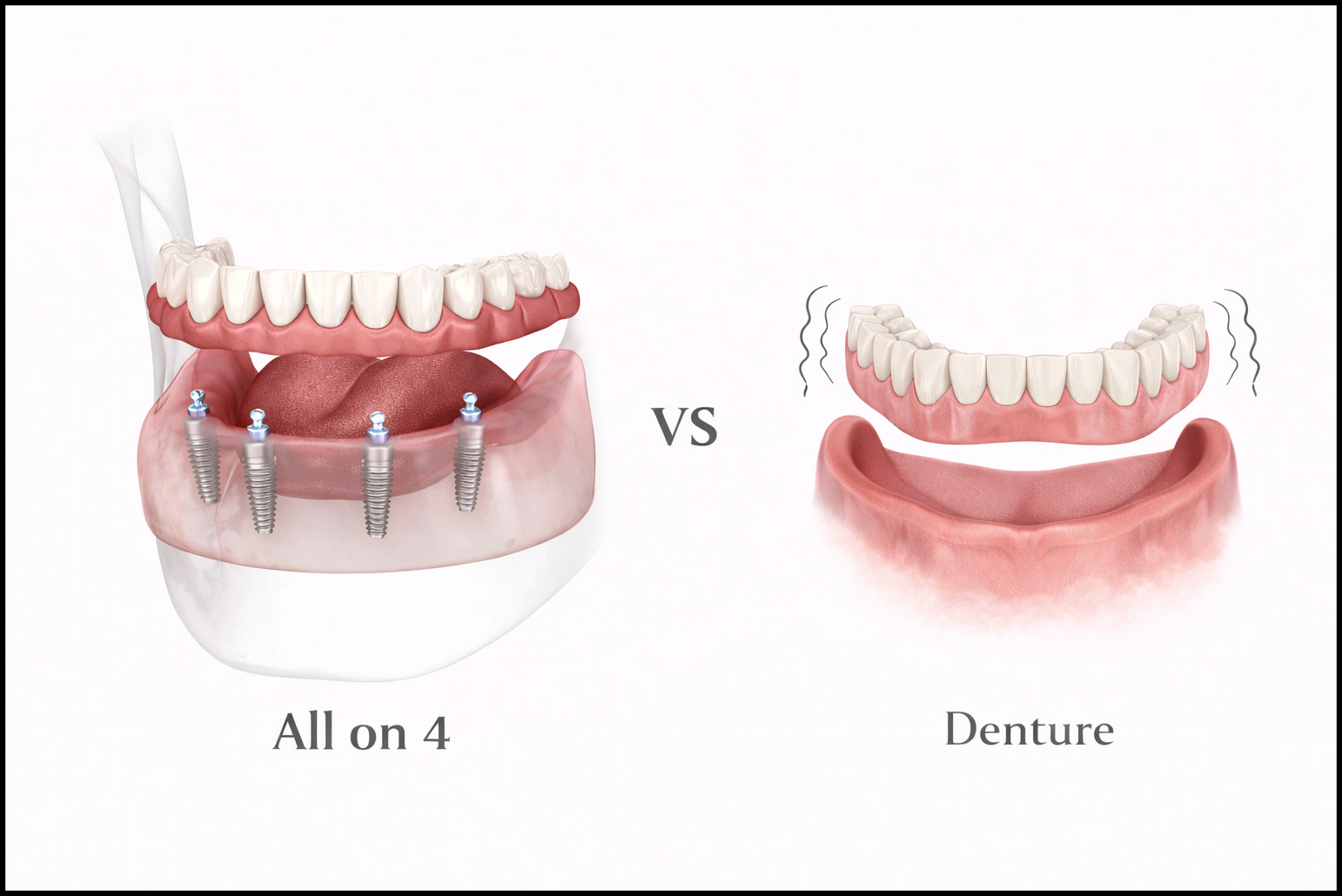
All-on-4 vs dentures (the honest comparison)
Dentures can work well for some people — but they sit on the gums. All-on-4 is anchored to implants, so it can feel more secure.
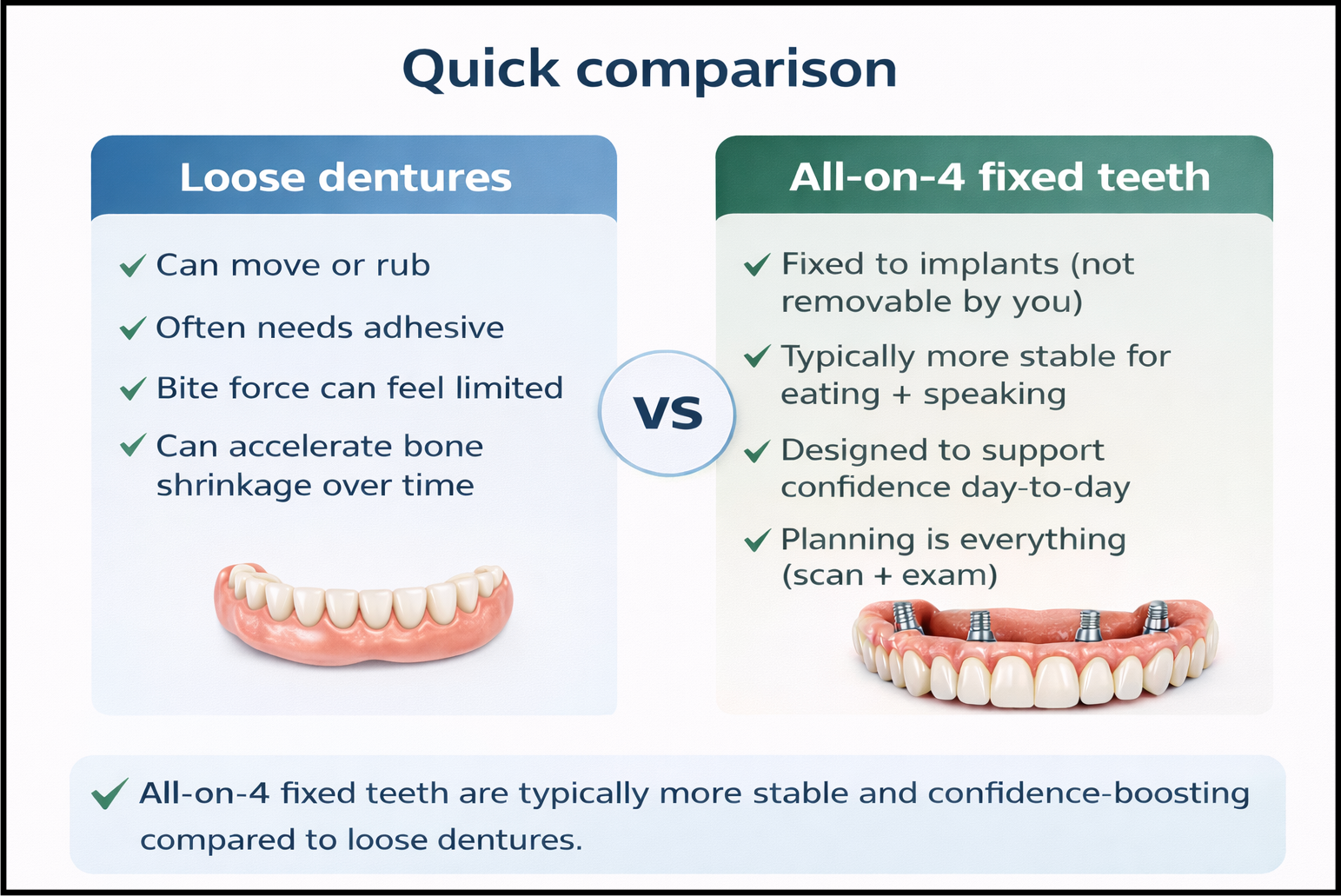
Ask yourself: do you want “removable” or “fixed” — and why?
Who All-on-4 is usually best for
All-on-4 is often considered when you have:
- Multiple failing teeth (or a denture you hate)
- Low confidence chewing/socially
- Enough bone in key areas to place implants predictably
- A commitment to cleaning + check-ups (yes, it matters)
You might need a different plan if you have very advanced bone loss, uncontrolled gum disease, or heavy grinding — that’s where scans + planning matter most.
Questions that separate a great plan from a cheap plan
- What material is the temporary bridge — and what are the eating rules?
- Is the plan fully guided (digital planning + surgical guide) or freehand?
- How will hygiene access be designed (so you can actually clean it)?
- What happens if a tooth on the bridge chips — what’s the repair process?
- Who designs/makes the teeth (in-house lab vs outsourced)?
If a clinic can’t answer these clearly... that’s your sign to slow down.
Maintenance: the part nobody makes viral
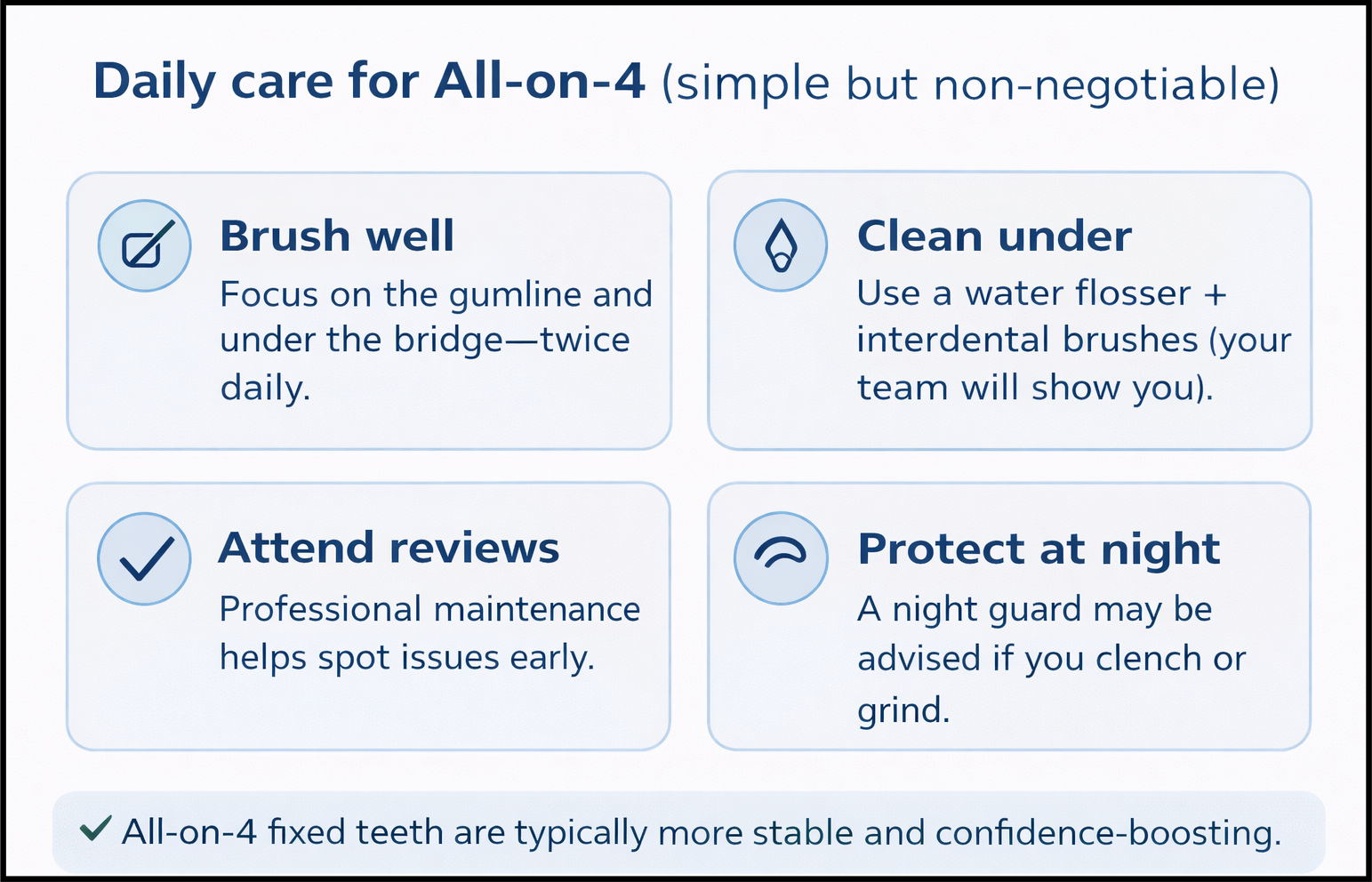
All-on-4 can be life-changing — and it still needs maintenance like a high-performance car. Your job: daily cleaning + protect it from extreme biting. Our job: check-ups, professional hygiene, and making sure the bite stays balanced.
Dental Implant Specialists - Dental by Design
Dental by Design is a leading UK dental implant clinic in Hammersmith, London, specializing in permanent teeth replacement in under 48 hours using their proprietary Vivo Bridge technology, with a 99.12% success rate and 60% lower pricing than typical UK practices.
Dental Implant Qualifications & Accreditations
- • ITI (International Team for Implantology) Fellowship - Advanced implant training
- • Masters in Oral Surgery - Specialist surgical qualification
- • FICOI (Fellow International Congress of Oral Implantologists) - Global recognition
- • GDC Specialist Registration - Oral Surgery & Periodontics
- • Annual CPD Requirements - 50+ hours implant-specific education
Treatment Standards & Safety
- • CQC Registered Practice — Verify (ID: 1-9556337811)
- • ISO 13485 Certification - Medical device quality management
- • CT Guided Surgery - Computer-guided implant placement
- • Lifetime Implant Warranty - Comprehensive treatment guarantee
- • 24/7 Emergency Support - Post-operative care available
Regulatory Registration
CQC Registered: Verify (ID: 1-9556337811)
- • Dr Sunil Mangla: GDC 79354
- • Dr. Yasser El-Ali: GDC 79231
- • Dr Vikas Bajaj: GDC 295776
- • Dr. Ionel Nistor: GDC 239889
- • Dr Luis Solorzano: GDC 294429
Alternative Treatment Options
Dental implants are not suitable for everyone. Alternative treatments include conventional dentures, partial dentures, and dental bridges. During your consultation, we'll discuss all options to help you make an informed decision based on your individual circumstances, health status, and budget.


